


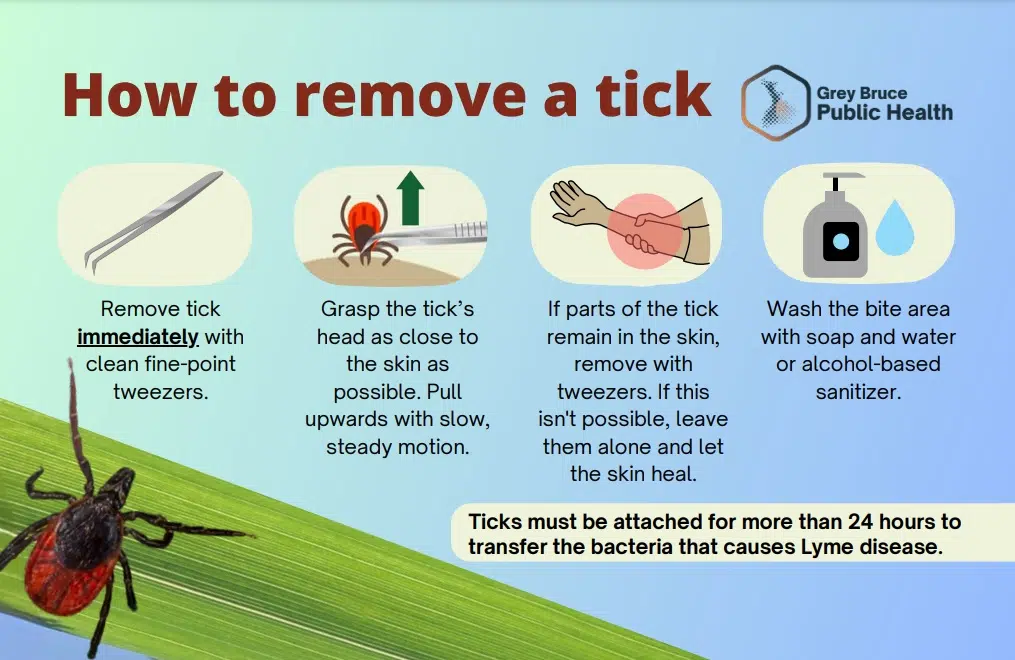
Grey Bruce Public Health is reminding everyone to stay safe during tick season.
The warning comes with the warmer weather, along with the fact that a large portion of the region is an established risk area for blacklegged ticks.
The insects can spread Lyme disease by biting their prey, which includes pets and humans.
Blacklegged ticks, also known as deer ticks, can carry the bacterium B. burgdorferi, which, if transmitted to humans via a tick bite, can cause Lyme disease.
About 3,115 people contracted Lyme disease in Ontario in 2025, which is a 33% increase over the number of human cases reported in 2024.
Nearly 200 people have been diagnosed with Lyme disease so far this year.
Public Health Manager Gillian Jordan said in a media release that due to the warming climate, ticks are active for longer periods each year, and their habitat area has also expanded.
The best way to prevent tick bites are to use bug spray with DEET or Icaridin, wearing close-toed shoes and covering exposed skin, including tucking pant legs into socks and shirts into pants, and sticking to cleared paths and trails and avoiding long grass.
Ticks also carry the parasite that causes babesiosis, which leads to anaplasmosis or Powassan virus in people.
You can also stay safe by wearing light-coloured clothing to make it easier to spot the insects on clothing, using a sticky lint roller on clothing and shoes before entering your home or vehicle after being outdoors, and fully checking family members and pets upon returning home.
Early Lyme disease symptoms can include fever, headache, muscle/joint pain, fatigue, and a bull’s-eye rash. Residents should consult a doctor if experiencing these symptoms.
If left untreated, Lyme disease can lead to recurring arthritis, neurological problems, numbness, or paralysis, but if caught early, Lyme disease can be treated effectively with antibiotics.